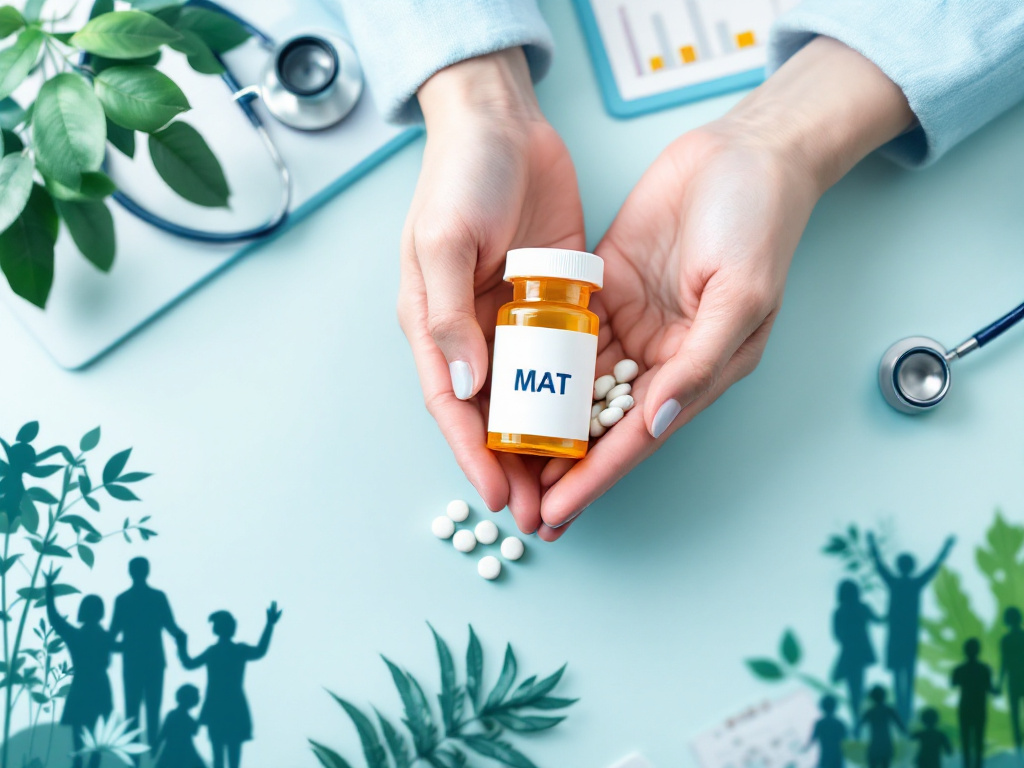
Understand medication management for addiction
You might feel uncertain about how medication management for addiction fits into your recovery. Medication management, often called medication-assisted treatment or MAT, uses FDA-approved medications to ease withdrawal symptoms, reduce cravings, and stabilize brain chemistry. When paired with counseling and behavioral therapies, this whole-patient approach can boost your chances of sustained sobriety and lower the risk of relapse.
The 2022 update of the CDC clinical practice guideline emphasizes individualized, patient-centered care in opioid prescribing and addiction management. It warns against rapid tapering or rigid dose thresholds that could trigger withdrawal or psychological distress [1]. By working closely with your provider, you can find a medication regimen that balances safety and effectiveness.
In your treatment plan, medication management goes beyond writing a prescription. It includes thorough medication reviews, dosage adjustments, monitoring for side effects, and coordination with your therapy team. Your provider may also prescribe naloxone or nalmefene to reduce overdose risk and ensure safety in case of relapse [2]. If you’re undergoing alcohol detox, a short course of benzodiazepines can help control anxiety and prevent seizures, but these medications carry addiction potential and are monitored closely [3].
Whether you’re dealing with opioid use disorder or alcohol use disorder, you have options. From methadone and buprenorphine for opioid dependency to naltrexone, acamprosate, and disulfiram for alcohol recovery, your care plan can be tailored to your needs. Many people find that combining medication with individual and group counseling, peer support, and holistic therapies creates a supportive environment for healing. To explore how medication can complement your therapy, check out our resources on addiction treatment with medication and medication assisted rehab.
By understanding how medication management works, you can take an informed step forward. In the next section, we’ll compare the FDA-approved medications most commonly used in MAT programs so you can see which options align with your recovery goals.
Compare FDA-approved medications
Medication management for addiction relies on several FDA-approved drugs. Each option works differently depending on your diagnosis, medical history, and treatment objectives. Below is an overview of the most common medications used for opioid use disorder (OUD) and alcohol use disorder (AUD).
Medications for opioid use disorder
| Medication | Type | Key benefit |
|---|---|---|
| Methadone | Full opioid agonist | Prevents withdrawal, reduces cravings [4] |
| Buprenorphine | Partial opioid agonist | Lowers overdose risk, flexible office prescribing [2] |
| Naltrexone | Opioid antagonist | Blocks euphoric effects, curbs cravings [3] |
All three medications are FDA-approved and safe for long-term use when monitored by a qualified specialist.
- Methadone is taken orally under strict supervision. It stabilizes brain chemistry and can be used indefinitely to prevent withdrawal and reduce illicit opioid use.
- Buprenorphine, available alone or as Suboxone (combined with naloxone), carries a lower overdose risk and can be prescribed in physician offices, expanding access to care.
- Naltrexone requires full detox before initiation but offers an injectable formulation for monthly dosing, blocking opioid receptors without abuse potential.
To learn about local programs offering these options, visit our mat for opioid use disorder or explore an opioid mat treatment program.
Medications for alcohol use disorder
| Medication | Mechanism | Key benefit |
|---|---|---|
| Acamprosate | Glutamate modulator | Reduces cravings and supports neural recovery [3] |
| Disulfiram | Aldehyde dehydrogenase inhibitor | Causes unpleasant reaction to alcohol, deterring use |
| Naltrexone | Opioid antagonist | Blocks reward pathways, lowers craving [3] |
- Acamprosate helps stabilize chemical imbalances that occur with long-term alcohol use, easing the transition to sobriety.
- Disulfiram produces aversive symptoms if alcohol is consumed, encouraging adherence under supervision.
- Naltrexone, in tablet or extended-release Vivitrol form, blocks alcohol’s rewarding effects and is effective for many patients once detox is complete.
For more on alcohol MAT services, check our mat for alcohol use disorder and alcohol mat treatment pages.
Integrate medication with therapy
Pairing medication management with counseling and behavioral therapies is essential for a holistic recovery. An integrated plan addresses not only physical dependence but also underlying psychological and social factors that contribute to substance use.
Whole-patient approach
MAT offers a whole-patient model that combines pharmacology with psychotherapy, social support, and case management. In an integrated mat program, you’ll work with an interdisciplinary team—medical providers, therapists, and peer specialists—to create a personalized strategy. Studies show that combining medication with therapy improves retention in treatment, reduces illicit drug use, and enhances quality of life.
Counseling and peer support
Medication can stabilize cravings and withdrawal, but counseling teaches coping skills for triggers, stress, and emotional challenges. You might join:
- Individual therapy to explore personal issues and develop relapse-prevention plans
- Group therapy for peer feedback and accountability
- Family therapy to rebuild relationships and support systems
- Peer recovery support services to tap into lived-experience guidance
These elements, often called mat therapy combination treatment, reinforce healthy habits, address co-occurring mental health conditions, and cultivate resilience.
Manage safety and side effects
Medication management involves ongoing monitoring to maximize benefits and minimize risks. Your provider will adjust your regimen based on your response, side effects, and evolving needs.
Monitoring and dosage adjustment
Regular check-ins—via office visits or telehealth—allow you and your provider to:
- Review symptom control and craving levels
- Adjust dosage gradually to prevent withdrawal or overdose
- Taper safely when the time is right, avoiding rapid change that can cause distress [1]
Keeping an open dialogue about how you feel helps tailor your plan. Lab tests and medication counts can confirm adherence and safety.
Avoiding interactions and misuse
Some combinations increase risks. For example, concurrent benzodiazepine use can lead to sedation and dependency, so providers limit these medications to short-term use [3]. You may also carry naloxone to reverse accidental overdose. Clear instructions on safe storage, proper dosing, and what to do if you miss a dose reduce the chance of misuse.
Access medication management programs
Finding the right program and understanding costs are key steps in your journey. Many clinics offer specialized services for MAT, and financial assistance is often available.
Finding a MAT program
- Talk to your primary care physician or addiction specialist about medication assisted treatment.
- Search local listings for a clinical mat addiction treatment center or hospital-based program.
- Call SAMHSA’s National Helpline at 1-800-662-HELP (4357) for free, confidential referrals to nearby facilities [5].
- Text your ZIP code to 435748 (HELP4U) to receive treatment referrals via SMS [5].
- Explore our guide on mat addiction treatment program admissions to compare levels of care and services.
Covering treatment costs
Many MAT programs accept:
- Private insurance, including Medicaid and Medicare
- Sliding-scale fees based on income
- State-funded grants or vouchers
- Nonprofit organizations offering scholarships
Ask your provider about patient assistance programs for medications like buprenorphine or naltrexone. A financial counselor at your clinic can help you navigate coverage and payment options.
Overcome stigma and barriers
Social misconceptions and policy hurdles can make you hesitate to seek MAT, but understanding the facts and building a trusting treatment relationship are vital.
Addressing misconceptions
You may hear that MAT simply substitutes one drug for another. In reality, medications such as methadone and buprenorphine restore normal brain function disrupted by opioid dependence, much like insulin for diabetes [6]. Research shows MAT reduces criminal behavior, supports employment, and lowers infectious disease risks when paired with counseling [4].
Building trust with providers
Open communication is essential. Share your concerns about dependence, side effects, or long-term use. Ask about:
- Treatment philosophy and success metrics
- Frequency of medication reviews and therapy sessions
- Support for co-occurring disorders like depression or anxiety
A transparent provider will involve you in decision-making, explain each step, and adjust your plan as your needs evolve.
Explore additional resources
Support is available around the clock. These resources can guide you toward care and community connections.
Helplines and support
- SAMHSA National Helpline: 1-800-662-HELP (4357), confidential referrals [5]
- Text HELP4U (5-digit ZIP code to 435748): treatment referrals via SMS
- Local peer support groups: find listings through your treatment center or community health department
Further reading
- Introduction to addiction treatment with medication
- How to choose an integrated mat program
- Understanding mat therapy combination treatment
- Preparing for the mat admissions program
Start your recovery plan
Now that you understand medication management for addiction, take the next step by talking to a qualified provider. Ask about MAT options, therapy integration, and cost assistance. Whether you choose methadone, buprenorphine, or naltrexone for opioids, or acamprosate, disulfiram, or naltrexone for alcohol, a personalized plan can support your journey.
Reach out today to schedule an assessment, explore a medication assisted rehab program, or learn more about our opioid recovery medication program. Your path to lasting recovery begins with one call.